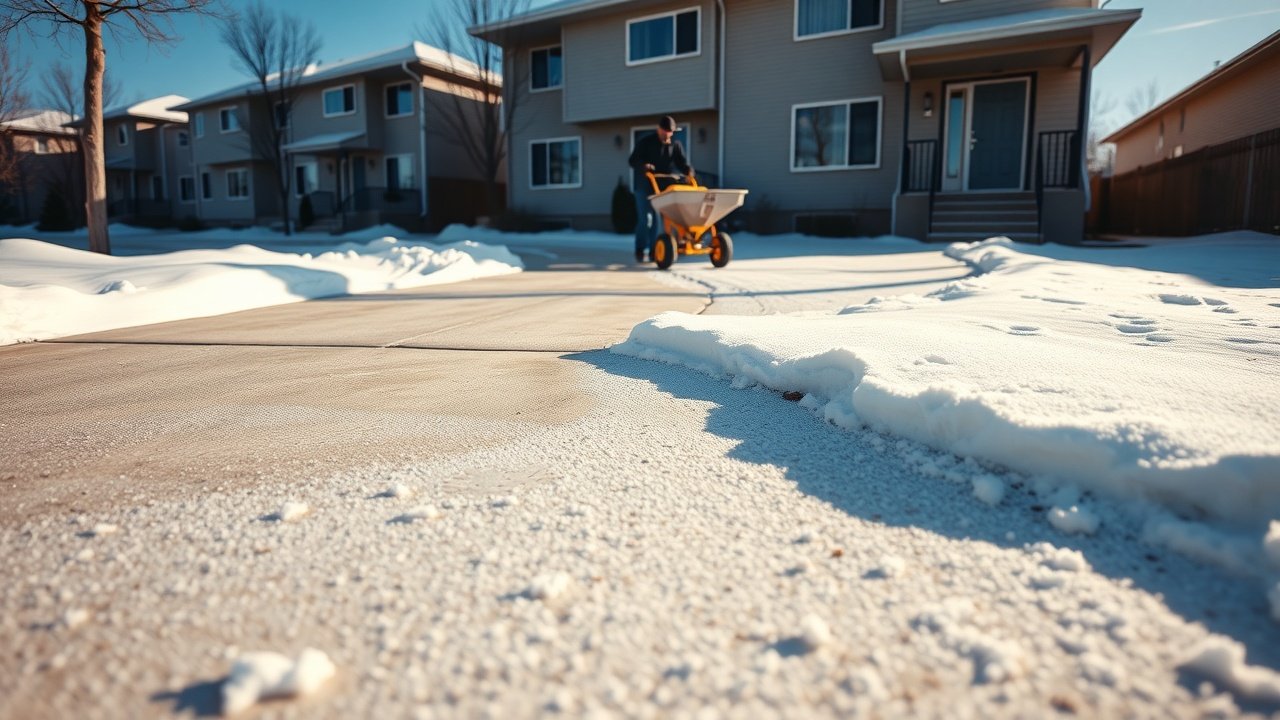
Edmonton winters are legendary, but for property owners, they are also a liability minefield. Between the freeze-thaw cycles of the River Valley and the heavy slush of a Phase 2 Parking Ban, keeping your property safe and compliant is a full-time job.
At D Gees Management (DGM), we treat winter maintenance as a science. Here is how we protect your asset—and your wallet—during the 2026 Edmonton winter season.
1. The 48-Hour “Bare Pavement” Standard
In 2026, the City of Edmonton has increased its focus on accessibility. It is no longer enough to just “shovel a path.”
- The Rule: Sidewalks must be cleared to the full width of the pavement.
- The Risk: If a peace officer inspects your property and finds compacted ice, you face a $100 fine. If the City sends a crew to clear it, the bill (often $200+) is added to your property tax roll.
- Our Strategy: DGM coordinates professional snow removal that triggers automatically at 2cm of accumulation, ensuring your property is cleared long before the 48-hour window closes.
2. Preventing “Salt Scarring” on Concrete
Salt is a necessary evil for traction, but it is the primary cause of “spalling” (surface crumbling) on Edmonton driveways.
- The Problem: Sodium chloride (rock salt) accelerates the freeze-thaw cycle, forcing water into the pores of your concrete.
- The 2026 Solution: We recommend Calcium Magnesium Acetate (CMA) or Potassium Chloride. These are “concrete-safe” alternatives that work at lower temperatures (down to -25°C) without eating away at your driveway’s finish.
- Pro Tip: Always apply a penetrating sealer in the fall to create a hydrophobic barrier before the first slush hits.
3. Managing the “Windrow” Headache
During Edmonton’s 2026 residential blading cycles, City plows often leave a “windrow” (a pile of snow) at the end of driveways.
- The Bylaw: If the windrow is under 30cm (12 inches), it is the property owner’s responsibility to clear it.
- The Hazard: Leaving a windrow to freeze creates an impenetrable ice wall that prevents tenants from parking, leading to frustration and potential lease disputes. DGM crews are equipped to handle windrow clearing as part of our standard winter service.
4. Slush Management and Drainage
The most dangerous time in Edmonton isn’t -30°C; it’s the +2°C thaw.
- The Danger: Melting snow runs across sidewalks and refreezes into “black ice” overnight.
- The Fix: We ensure downspouts are directed at least six feet away from walking paths. We also use a “sand-salt” mix (available for free at City roadway maintenance yards) to provide immediate grit on wet surfaces that are about to freeze.
5. Protecting Your Lawns
Many landlords unknowingly kill their curb appeal by piling salt-heavy snow onto the front lawn.
- The Impact: High salt concentrations in the soil prevent grass from absorbing water in the spring, leading to “salt burn.”
- The DGM Protocol: We instruct our teams to distribute snow evenly and avoid “dead zones” where salt can concentrate. In April, we recommend a heavy “flushing” of the soil with water to leach out residual minerals.