



Vacancy is one of the most expensive problems a rental property owner can face. Even a single month without a paying tenant can wipe out a significant portion of your annual return. The most common causes of high vacancy rates in Calgary rentals are overpricing, poor property condition, slow marketing, and uncoordinated tenant turnover. The good news is that most of these problems are within your control, and fixing them does not require a major investment of time or money.
This guide walks you through practical, proven steps to reduce rental vacancy in Calgary, attract quality tenants faster, and keep your investment property generating steady income year-round.
Why Vacancy Rates Matter for Calgary Property Owners
Every day a rental unit sits empty, you are losing money. It is not just the missed rent payment. You are still paying your mortgage, property taxes, insurance, and utilities on a unit that is producing nothing. For Calgary landlords, that financial pressure adds up fast.
To put it in concrete terms: if your rental generates $2,200 per month and sits vacant for just six weeks between tenancies, you have lost roughly $3,300 in gross income. Do that once a year and your effective annual yield drops noticeably. Do it twice and the impact on your investment return becomes hard to ignore.
According to the Canada Mortgage and Housing Corporation (CMHC), Calgary’s apartment vacancy rate has shifted considerably in recent years, tightening to historically low levels as population growth outpaced rental supply. While a low city-wide vacancy rate is generally favorable for landlords, it does not automatically protect individual properties. Units that are overpriced, poorly marketed, or in below-average condition still sit empty, even in a competitive market.
The key takeaway is simple: your property’s vacancy rate is not just a market condition. It is a performance metric. Tracking it and actively working to lower it is one of the highest-return activities you can do as a Calgary property owner.
What Causes High Vacancy Rates in Calgary Rentals?
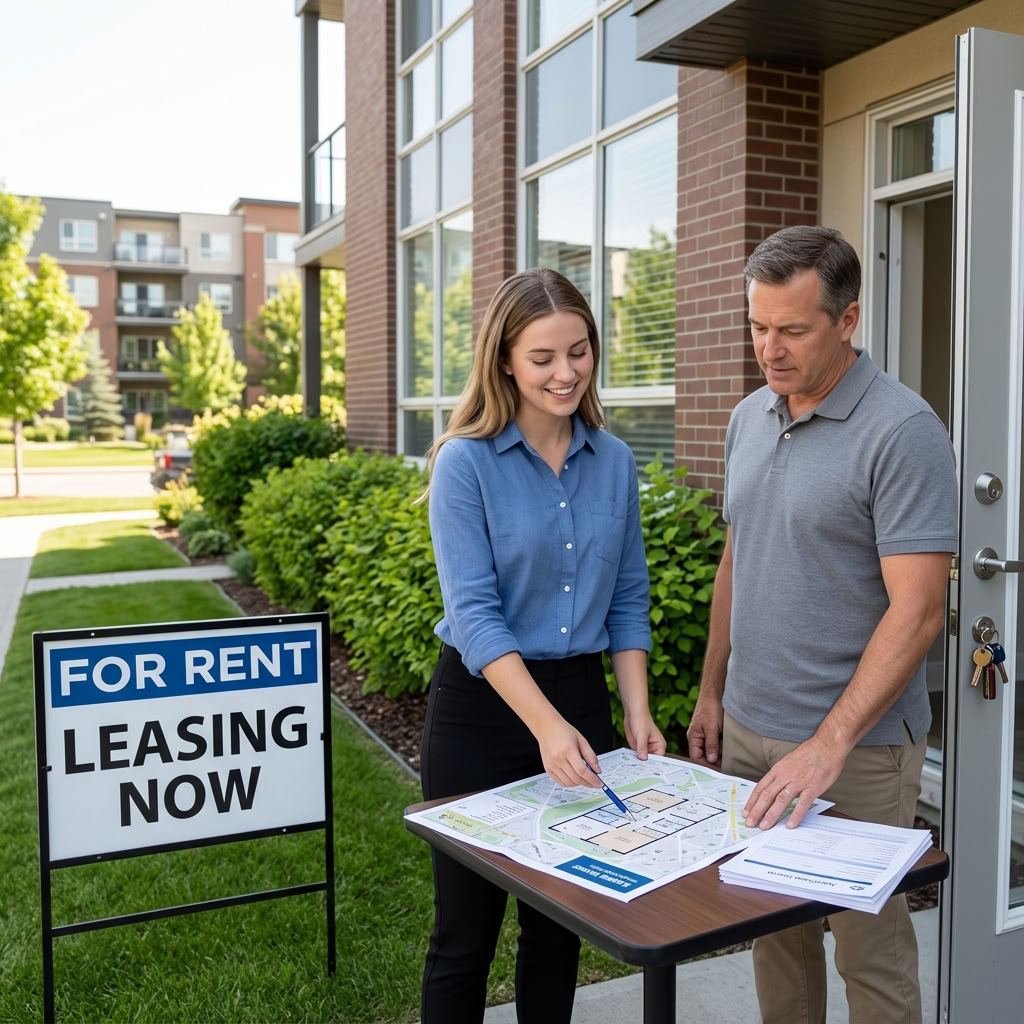
High vacancy in Calgary rentals is almost always caused by a combination of factors rather than a single issue. Understanding the root causes helps you address the right problems instead of making changes that do not move the needle.
The most common causes fall into four categories: incorrect pricing, poor property condition, weak marketing, and slow or disorganized tenant turnover. Each one extends the time a unit sits vacant, and each one is fixable with the right approach.
Is Your Rental Priced Correctly for the Calgary Market?
Overpricing is the single fastest way to extend your vacancy period. Renters in Calgary are price-aware. They are comparing your listing to several others at the same time, and if your unit is even $100 to $150 above comparable options in the same neighborhood, many of them will simply move on without even booking a showing.
Benchmarking your rent accurately means looking at what similar units in the same area are currently renting for, not what they were renting for six months ago. Check active listings on platforms like Rentals.ca, Zumper, and Kijiji. Pay attention to units with similar square footage, bedroom count, finishes, and included amenities. If your price is higher, make sure you can clearly justify the difference with something tangible like a newer kitchen, in-suite laundry, or an included parking stall.
At the same time, underpricing is not the answer. Setting rent below market value attracts applications quickly, but it also attracts tenants who may not qualify for higher-priced units elsewhere, and it locks you into a rate that is hard to raise without friction. The goal is accurate pricing, not the lowest price in the market.
How Property Condition Affects Tenant Interest
The condition of your rental is a direct signal to prospective tenants about how you operate as a landlord. A unit with scuffed walls, outdated fixtures, worn carpeting, or visible deferred maintenance tells applicants that problems will probably be slow to get fixed once they move in. Quality tenants, the ones with stable income and strong rental histories, have options. They will choose a cleaner, better-maintained property at a similar price every time.
Deferred maintenance also creates a compounding problem. Small issues that are ignored during a tenancy often become bigger, more expensive repairs when the unit is vacated. That extends your turnover timeline and pushes your re-listing date back further.
Addressing property condition does not mean renovating everything before every tenancy. It means ensuring the unit is clean, functional, and presentable. Fresh paint, deep cleaning, repaired fixtures, and updated lighting go a long way without requiring a large budget.
Proven Strategies to Minimize Rental Vacancy in Calgary

Reducing vacancy in Calgary comes down to three things: preparation, speed, and visibility. The strategies below are practical and can be implemented immediately, whether you manage one property or several.
Listing Your Property Before the Current Lease Ends
One of the most effective ways to reduce vacancy is to start marketing your unit before it is empty. Waiting until a tenant moves out to begin advertising means you are already behind. Ideally, you want to start the process 45 to 60 days before the unit becomes available.
Begin by providing your current tenant with proper written notice of your intent to re-list, as required under Alberta’s Residential Tenancies Act. Then start preparing your listing materials, photos, and pricing research while the tenant is still in place. Many landlords are reluctant to show a unit while it is occupied, but with tenant cooperation and proper scheduling, you can often have a new tenant lined up before the current lease ends, resulting in little to no gap in rental income.
If your tenant has given notice to vacate, ask them about their preferred times for showings and work around their schedule. Most tenants are reasonable if you communicate clearly and respect their space.
Writing a High-Converting Rental Listing for Calgary Tenants
Your listing is your first impression, and most prospective tenants will decide whether to book a showing within the first 30 seconds of reading it. A weak listing with vague descriptions and poor photos will generate fewer inquiries, even if the property itself is excellent.
Start with a strong opening line that highlights the most appealing feature of the unit. Be specific about what is included: appliances, parking, storage, pet policy, and utilities. Avoid vague phrases like “nice area” or “great value.” Instead, name the neighborhood, mention nearby transit, and reference specific amenities that renters actually care about.
Photos are often more important than the written description. Use natural light whenever possible, photograph every room, and make sure the space is clean and staged before shooting. A listing with 10 to 15 high-quality photos consistently outperforms one with 3 to 4 mediocre ones. If your budget allows, a professional photographer can make a real difference in the volume and quality of inquiries you receive.
Using Multiple Platforms to Reach Calgary Renters
Limiting your listing to a single platform limits your reach. Calgary renters search across multiple channels, and being visible on more than one significantly increases the number of qualified applicants who see your unit.
The most effective platforms for Calgary rental listings currently include Rentals.ca, Zumper, Kijiji, Facebook Marketplace, and PadMapper. Each platform attracts a slightly different demographic, so using several in combination gives you the broadest possible exposure. Some property managers also use targeted social media advertising to reach renters who are not actively searching but are open to moving.
Beyond online platforms, do not overlook your local network. Letting colleagues, neighbors, and existing tenants know about an upcoming vacancy can surface referrals that convert faster and often with lower screening risk than cold applicants.
How Professional Property Management Reduces Vacancy

An experienced property management company does not just collect rent and handle repairs. It brings systems, local market knowledge, and a proactive approach to tenant placement that most individual landlords cannot easily replicate on their own.
DGM Property Management has been working with Calgary rental property owners for over 15 years. With more than 500 property owners currently trusting us with their investments, we have developed a clear picture of what causes vacancies, how to prevent them, and how to fill units quickly when they do become available. Our 24/7 support model means that tenant issues get resolved before they turn into move-out decisions, and our tenant placement process is designed to minimize the time between tenancies from the start.
What Is Tenant Placement and Why Does It Matter?
Tenant placement is the full process of finding, screening, and placing a qualified tenant in your rental unit. It is not just about filling a vacancy fast. It is about filling it with the right person, because a bad placement leads to early move-outs, property damage, and the exact vacancy problem you were trying to solve.
A rigorous tenant placement process includes credit checks, employment and income verification, rental history review, and reference calls with previous landlords. It also involves clear communication about lease terms and expectations before the application is approved. When this process is done well, it significantly reduces turnover and the repeat vacancy cycles that drain landlord income over time.
At DGM, our tenant placement services are thorough by design. We apply consistent screening criteria across every application, which protects both our clients and the integrity of the tenancy from day one.
How Fast Maintenance Response Keeps Tenants Longer
One of the most overlooked drivers of tenant turnover is slow maintenance response. When a tenant submits a repair request and waits weeks for a resolution, their trust in the landlord erodes. Over time, that frustration builds into a decision to leave at the end of the lease, or sometimes before it.
Research consistently shows that tenant satisfaction is strongly tied to how quickly and reliably their maintenance concerns are addressed. A tenant who knows their landlord is responsive is far more likely to renew their lease, recommend the property to others, and take better care of the unit during their tenancy.
DGM’s 24/7 support structure ensures that maintenance issues are logged, assigned, and tracked in real time. Our vendor coordination network means repairs are completed faster, which keeps tenants happy and reduces the voluntary move-outs that create unnecessary vacancy.
Preparing Your Property Between Tenancies
The period between one tenancy ending and the next one beginning is where vacancy costs accumulate the fastest. How you manage this window directly determines how long your unit sits empty and how much money you lose in the process.
A well-organized turnover process covers three areas: repairs and improvements, cleaning and presentation, and re-listing speed. The faster and more efficiently you move through each stage, the shorter your vacancy window.
Essential Repairs and Upgrades That Attract Quality Tenants
Not all improvements deliver equal return when it comes to attracting tenants. Some upgrades have a high impact on rental appeal while costing relatively little. Others are costly but do not meaningfully move the needle on tenant interest or achievable rent.
The highest-impact, cost-effective improvements for Calgary rentals typically include fresh interior paint in neutral tones, updated light fixtures, clean and well-functioning kitchen and bathroom fixtures, and professional deep cleaning of carpets and hard surfaces. In-suite laundry, where it can be added, consistently ranks as one of the top amenities Calgary renters look for. Updated flooring, particularly replacing worn carpet with vinyl plank, is another upgrade that pays back quickly in both tenant quality and reduced cleaning time between tenancies.
Focus on improvements that address visible wear first. A tenant who walks into a clean, fresh-smelling unit with good lighting and functioning fixtures will feel confident in the property, regardless of whether the countertops are new.
How Quickly Should You Turn Over a Rental Unit in Calgary?
A realistic and well-managed turnover in Calgary should take between 7 and 14 days for a well-maintained unit. This window covers the move-out inspection, any necessary repairs or touch-ups, professional cleaning, photography, and listing publication.
If your turnover regularly takes longer than two weeks, that is a sign that either deferred maintenance is piling up or your process needs to be streamlined. Creating a standard checklist for each turnover helps you move through the steps consistently without missing anything. Booking your cleaning crew and any repair contractors in advance, as soon as you know the move-out date, reduces the time spent waiting for availability.
The goal is not to rush the process so much that you compromise the quality of the unit before the next tenant moves in. It is to eliminate the unnecessary delays, like waiting a week to schedule a cleaner or spending several days deciding whether to repaint, that extend your vacancy without adding any value.
Setting the Right Lease Terms to Avoid Seasonal Vacancies
Lease end dates matter more than most Calgary landlords realize. Calgary’s rental market follows seasonal patterns that create real differences in how quickly you can fill a vacant unit depending on the time of year.
Demand for rentals in Calgary tends to peak between May and September, driven by the spring and summer moving season, university semester start dates, and corporate relocations. Units that become available during this window have the largest pool of active renters looking. Units that become available in November or December face a much smaller pool, which means longer average vacancy times and sometimes pressure to lower rent to generate interest.
If you have flexibility in structuring lease terms, aim for lease end dates that fall between May and August. For tenants on fixed-term leases who are likely to renew, consider offering a slightly longer or shorter renewal term to shift the end date into a more favorable season. Even moving a lease end date by 30 to 60 days can make a meaningful difference in how quickly you can fill the unit at your target price.
Monitoring and Improving Your Vacancy Rate Over Time
Reducing vacancy is not a one-time fix. It requires ongoing attention to how your property is performing and a willingness to adjust your approach based on what the data tells you.
Start by tracking the basics: how long each vacancy lasts, how many inquiries your listing generates, how many showings convert to applications, and how many applications result in placements. These numbers tell you where the problem actually lives. If you are getting many inquiries but few showings, your listing price or description may be the issue. If you are getting showings but few applications, the property condition or your application process may be creating friction.
Set a benchmark for what acceptable vacancy looks like for your property. For most Calgary landlords, a vacancy rate of 2 to 5 percent annually is a reasonable target, which translates to roughly 7 to 18 days of vacancy per year. If you are consistently above that, something in your process needs to change.
Reviewing your performance after each tenancy, rather than only when a problem occurs, builds the habit of continuous improvement. Over time, small adjustments to pricing strategy, listing quality, turnover speed, and tenant screening add up to a significantly better-performing investment.
Frequently Asked Questions
What is a good vacancy rate for rental properties in Calgary?
A healthy vacancy rate for a Calgary rental property is generally between 2 and 5 percent annually. That works out to roughly 7 to 18 vacant days per year. If your unit is sitting empty for more than three to four weeks between tenancies on a regular basis, it is worth reviewing your pricing, marketing, and turnover process to identify what is causing the delay.
How long does it typically take to fill a vacant rental unit in Calgary?
In a well-managed turnover, most Calgary rental units can be filled within 2 to 4 weeks of becoming available. This includes completing repairs and cleaning, publishing the listing, conducting showings, screening applicants, and finalizing the lease. Units in high-demand neighborhoods with competitive pricing and strong listings often rent faster. Units that are overpriced, poorly marketed, or in below-average condition take longer.
Can a property management company guarantee faster tenant placement in Calgary?
No reputable property management company can guarantee a specific placement timeline, since outcomes depend on market conditions, property quality, and pricing. What a good property manager does guarantee is a faster and more systematic process. Companies like DGM Property Management bring local market knowledge, established screening systems, and multi-platform marketing that most individual landlords do not have access to on their own. That typically translates to shorter vacancy windows compared to self-managed properties.
What upgrades help reduce vacancy in Calgary rental properties?
The upgrades that have the biggest impact on Calgary rental vacancy are fresh paint, professional deep cleaning, updated light fixtures, in-suite laundry where possible, and replacing worn flooring with vinyl plank or similar durable materials. These improvements make the unit more appealing during showings and justify competitive or premium pricing. Major renovations rarely produce a proportional return in reduced vacancy time.
How does lease timing affect vacancy rates for Calgary landlords?
Lease timing has a direct effect on how quickly you can fill a unit. Calgary’s rental demand is highest between May and September. Units that become vacant during this window attract more applicants and rent faster. Units vacating in November or December face lower demand and often take longer to fill. Structuring your lease end dates to fall in the spring or early summer is one of the most practical ways to reduce seasonal vacancy exposure.
Is it worth hiring a property manager just to reduce vacancy?
For many Calgary landlords, yes. The cost of professional property management is often offset by the reduction in vacancy periods, better tenant quality, and fewer costly turnovers. If your property regularly sits vacant for several weeks between tenancies, or if you are spending significant time managing listings, showings, and screening yourself, a property manager can both save you time and improve your net return. DGM Property Management works with landlords across Calgary to make the numbers work in their favor.
What should I do if my Calgary rental has been vacant for more than 30 days?
Start by reviewing three things: your price, your listing, and your property condition. Price is usually the fastest lever to pull. Check what comparable units in your area are currently renting for and adjust if needed. If your pricing is competitive, look critically at your listing photos and description. If both seem solid, consider whether the unit needs improvements before it can compete effectively. If you have tried all three and are still not getting traction, speaking with a local property management company for an honest assessment of the property can help you identify what is holding it back.